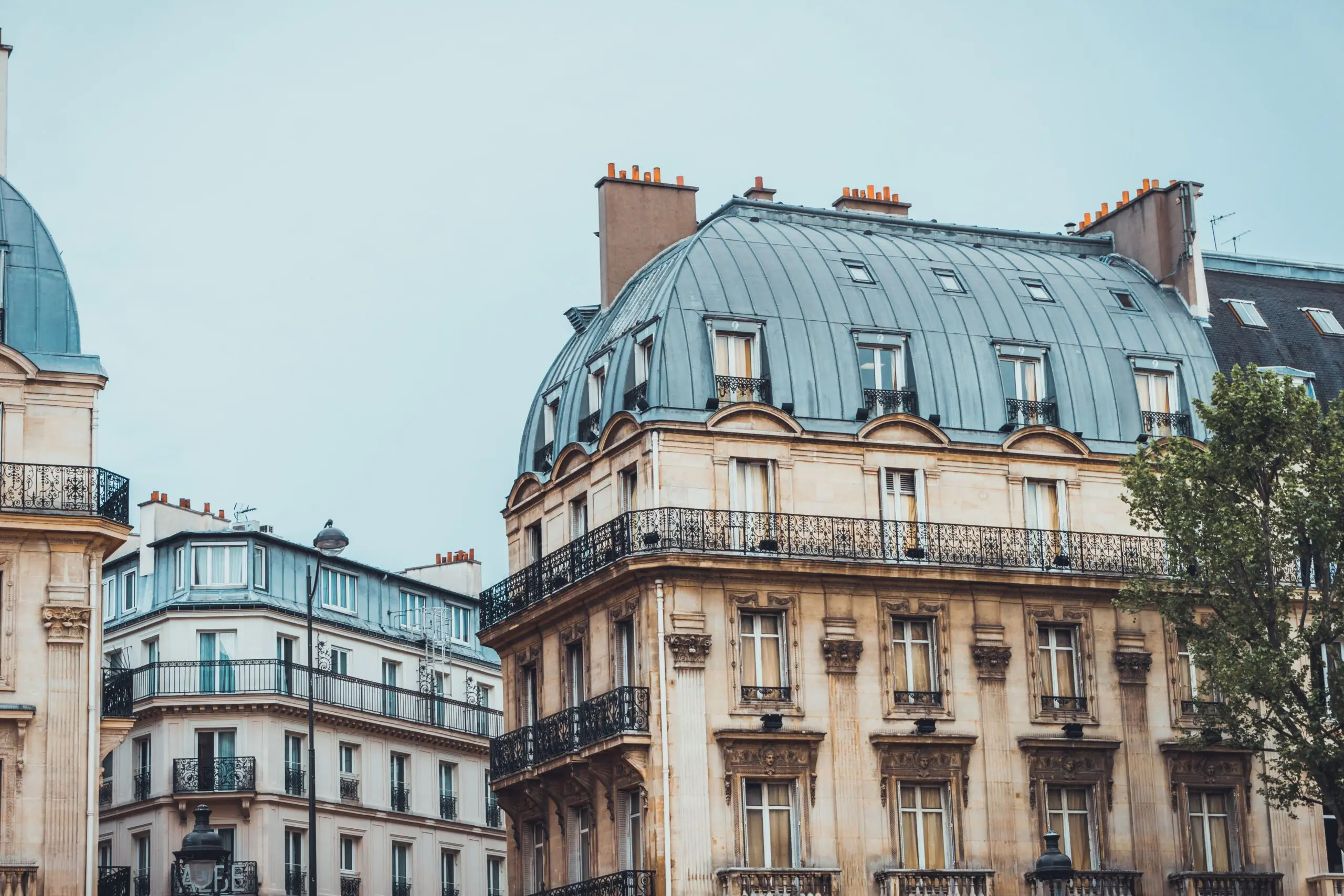


A practical guide to buying property in France as a foreign buyer, whether from abroad or as a new resident. This covers the notaire process and financing options if you’re not a resident. It also covers the fees and taxes to budget for, plus the inheritance rules that surprise almost everyone. Brought to you by the immigration team at LegalMova.
There’s no restriction on foreign buyers in France. No nationality condition, no permit, no minimum stay requirement, you can buy a farmhouse in Provence or an apartment in Paris without ever having set foot in the country. But this is exactly where a common misunderstanding creeps in: owning property in France grants you absolutely no right to live there. If your plan involves actually relocating, that runs through an entirely separate process, applying for a long-stay visa through France-Visas, which we’ve covered in detail across our visa guides. Buying the property and securing the right to reside in it are two completely independent questions, and conflating them is one of the more common and avoidable mistakes foreign buyers make. If you haven’t settled on a region yet, our best places to live in France guide is worth reading first.
Buying property in France means working within a heavily regulated system. It centers on the notaire, a state-appointed legal officer whose involvement is mandatory in every transaction, confirmed on the official Notaires de France portal. That regulation makes the French system genuinely one of the more secure in the world, but it also makes it slower and more paperwork-heavy than what buyers from the UK or US typically expect.
Altogether, a typical purchase takes around 8 to 12 weeks from an accepted offer to receiving the keys, though rural land involving SAFER review, or more complex titles, can take longer.
The single biggest cost of buying property in France is the notaire fee.
The frais de notaire are the largest closing cost you’ll face. The figure surprises a lot of first-time foreign buyers, since it’s larger than what’s typical in many other countries. For an existing property, expect 7 to 8% of the purchase price. For a new build, it drops to 2 to 3%, since VAT is already embedded in the sale price instead.
Notaires de France’s own fee calculator lets you run the exact figure for a specific price and property type. On a €400,000 existing property, that’s roughly €28,000 to €32,000 in notary fees alone. Compare that to €8,000 to €12,000 for an equivalent new build. That’s a difference large enough to shift the economics between the two options.
Despite the name, most of this fee isn’t actually payment for the notaire’s own work. It’s largely made up of transfer taxes (droits de mutation) that vary by département, along with land registration fees. The notaire’s own regulated fee is a smaller portion of the total.
Real estate agency commissions, where an agency is involved, typically run 4 to 7% plus VAT. The seller almost always pays these, already folded into the advertised asking price (marked FAI, frais d’agence inclus).
Financing is often the biggest practical hurdle when buying property in France as a non-resident. The good news: French banks do lend to them. France remains a foreign-buyer-friendly mortgage market by European standards. That said, the terms tighten the further your profile is from a French resident with a stable local income:
Budget for more than just the loan itself. A bank arrangement fee (frais de dossier) runs roughly €500 to €1,500. A property valuation costs €300 to €600. Mandatory borrower’s loan insurance (assurance emprunteur) runs around 0.2 to 0.6% per year. A loan registration duty adds about 0.715% of the loan amount. If you use a mortgage broker, a worthwhile step given how paperwork-heavy this process is, expect a fee of 1 to 2% of the mortgage amount.
Many foreign buyers pay in cash to avoid this financing complexity entirely. If you do, your funds still pass through the notaire’s regulated escrow account under full anti-money-laundering checks. So it’s worth documenting the origin of your funds well before you reach that stage. Either way, you’ll want a French account in place before you get this far. Our guide to opening a French bank account as a foreigner covers what that actually involves.
The costs of buying property in France don’t stop at completion. Two annual taxes follow.
Every property owner in France pays taxe foncière, an annual property tax based on the property’s cadastral rental value. The local commune sets this value, and it varies enormously by location. Expect roughly €1,000 to €3,000 a year for a Paris apartment, or €500 to €2,000 in a provincial area. You owe this regardless of whether you actually occupy the property.
Taxe d’habitation was fully phased out for primary residences by 2023. However, it still applies to second homes, and in high-demand housing zones it can carry a surcharge of up to 60%. This matters directly for foreign buyers, since a second home in France is exactly the profile many of you fall into.
Rental income earned from the property, and capital gains on eventual resale, are both taxed in France too. The specific treatment can depend on tax treaties between France and your home country. It’s worth checking with a tax advisor for your specific situation rather than assuming a blanket rule. These ongoing costs are worth weighing against your overall budget, covered more broadly in our cost of living in France guide.
If you’re looking at agricultural land specifically, you’ll encounter SAFER (Société d’Aménagement Foncier et d’Établissement Rural), a body with pre-emption rights on rural land sales. In practice, this means SAFER can step in and purchase the land itself, at the agreed price, ahead of your own purchase completing. It’s one of the conditions suspensives built into the compromis de vente for exactly this reason. Factor it into your timeline expectations if you’re buying anything rural.
This is one of the most consequential things a foreign buyer can overlook. French inheritance law applies to French real estate, regardless of your own nationality or where you live. It includes forced heirship rules that reserve a guaranteed share of the property for your children. If you’re used to a legal system where you can leave your estate to whomever you choose, this comes as a real surprise. It’s exactly why how you structure ownership matters as much as what you buy.
One common structure is simple joint ownership (indivision), where each buyer owns a defined share. Some buyers pair this with a clause de tontine, which ensures a surviving co-owner inherits the whole property automatically. Unmarried couples often use this specifically to work around forced heirship between each other. For family purchases or broader estate planning, people commonly use a Société Civile Immobilière (SCI) instead, a dedicated property-holding company structure. Our guide to company types in France for foreign entrepreneurs covers how a structure like this compares to the standard business entities.
None of this is a decision to make after you’ve already signed. Settle it before the purchase, ideally with input from a notaire. For anything complex, cross-border tax structuring, inheritance-burdened titles, or off-plan purchases, bring in an independent English-speaking avocat alongside the notaire too. That typically costs €2,000 to €5,000, money well spent given what’s at stake.
Most people start their search for buying property in France on one of four portals. These are SeLoger, LeBonCoin, Bien’ici, and PAP (sales directly between private individuals, with no agency fee). France’s notaire system provides strong protection once you’re engaged in a transaction, but scams targeting foreign buyers do occur earlier in the process, particularly in high-demand markets like Paris, Nice, Bordeaux, and Lyon. As with renting an apartment in France as a foreigner, never send money before you’re inside a properly documented, notaire-involved transaction, urgency and pressure to wire funds quickly are the classic warning signs.
Can foreigners buy property in France? Yes. Buying property in France carries no nationality condition, permit requirement, or minimum stay for foreign buyers. You can purchase without ever having set foot in the country.
Does buying property in France help my visa application? No, not directly. Property ownership doesn’t grant residency rights. Consulates generally don’t treat it as a substitute for the financial or professional conditions your visa category actually requires.
Is the notaire working for me or for the seller? Neither, specifically. The notaire is a neutral state-appointed officer handling the legal transaction for both parties. That’s exactly why a separate avocat is worth considering for complex purchases.
What happens if I want to leave the property to someone other than my children? French forced heirship rules generally reserve a share for your children regardless of your wishes. You can address this by structuring ownership through a tontine, SCI, or other planning before the purchase.
Do I need to worry about SAFER if I’m just buying an apartment in a city? No. SAFER pre-emption rights apply specifically to agricultural and rural land, not standard urban residential property.
Buying property in France and securing the right to live there are separate processes. Getting the visa side right matters just as much as getting the purchase right. Our team at LegalMova helps clients think through both halves of that picture together.
Book your free consultation with our team and let us assess your situation in full. No commitment, no jargon, just clear answers about your move to France.