

September 8, 2026
A practical comparison of France’s most popular retirement regions, weighing climate, cost of living, expat community, and healthcare access, to help you narrow down where to actually settle. Brought to you by the immigration team at LegalMova.
Before comparing specific regions, it helps to be clear about which trade-offs matter most to you, since no single place in France scores well on everything. The main variables retirees weigh against each other are climate (Mediterranean warmth versus milder, greener seasons), cost of living (coastal and touristic areas run meaningfully higher than inland regions), expat community size (which affects how much English you’ll hear day to day, for better or worse depending on what you want), healthcare access (proximity to well-equipped hospitals matters more as retirement goes on), and transport links (particularly relevant if you’re planning regular trips back to the UK or elsewhere).
With that framework in mind, here’s how the country’s most established retirement destinations actually compare.
The Dordogne, in southwestern France, has one of the largest concentrations of British and American retirees in rural France, and that established community is a genuine practical advantage: English is widely spoken in daily life, and the transition into local systems tends to be easier than in areas with fewer expats. It offers rolling countryside, medieval villages, affordable property compared to the coast, and a noticeably slower pace of life. The trade-off is that it’s inland and rural, so if you want walkable urban amenities or direct international flight access, this isn’t it.
Provence delivers the France many people picture when they imagine retiring there: sunny climate, lavender fields, lively markets, and a genuine “art de vivre” quality to daily life. Aix-en-Provence specifically offers a walkable historic center, a strong expat network without feeling like a tourist trap, and easy connections to Marseille for bigger-city amenities when needed. The catch is price. This is a premium region, and it’s not the right fit if affordability is your main constraint.
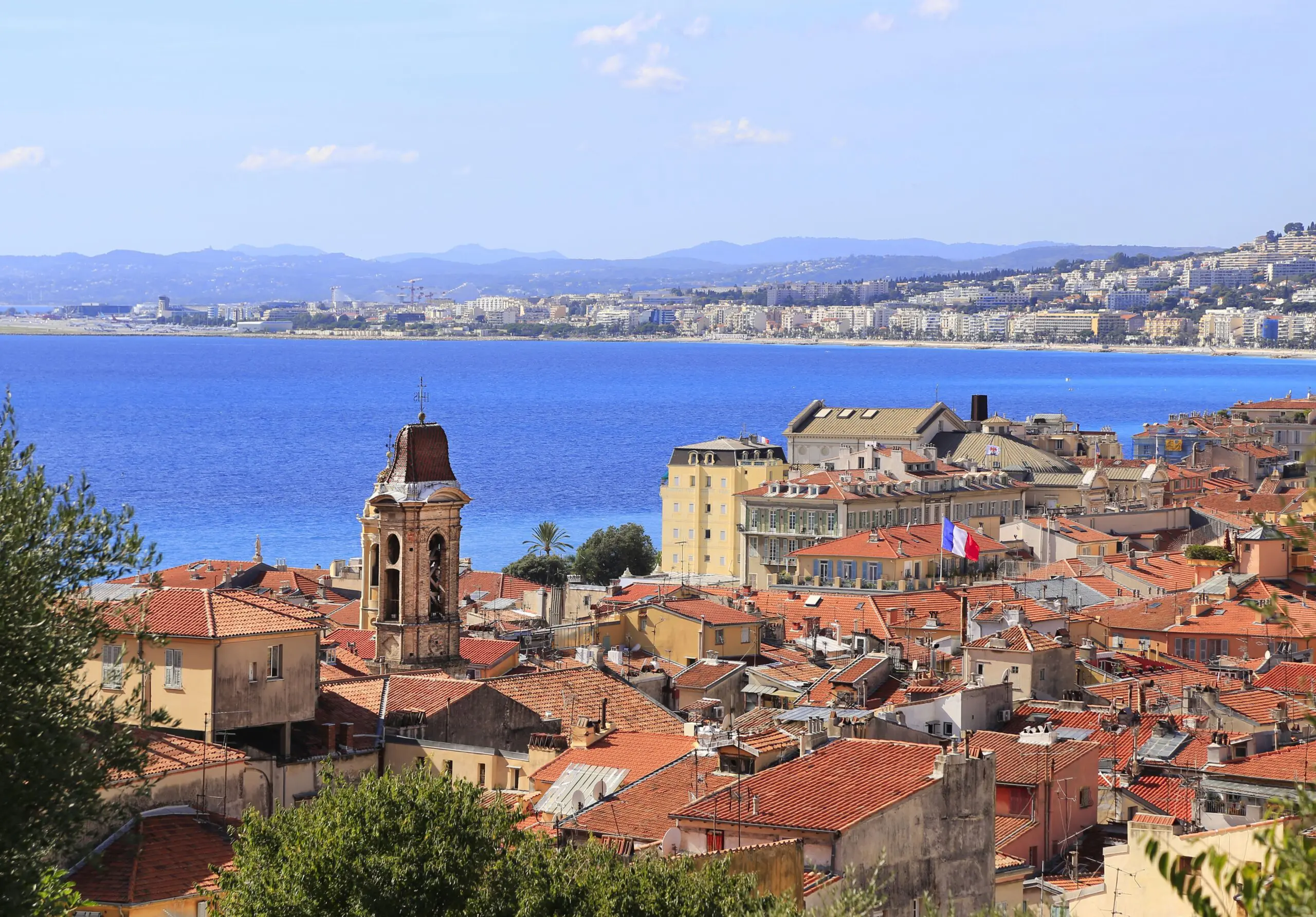
Nice and the surrounding Côte d’Azur offer the warmest year-round climate in mainland France, along with strong international flight connections and well-established English-speaking services. It costs more than inland towns, but many retirees find the trade-off worthwhile specifically for the climate and the ease of staying internationally connected. If sun and accessibility matter more to you than budget, this region consistently ranks near the top of retirees’ lists.
Bordeaux blends genuine city amenities with easy access to surrounding countryside and vineyards, and its direct high-speed train connection to Paris, around 2 hours, is a real practical advantage for anyone who wants city access without living in the capital. It has a growing international community and sits at a lower cost of living than Paris or Nice, making it a strong middle-ground option for retirees who don’t want to give up urban life entirely.
For retirees who want a coastal lifestyle without Mediterranean prices, or who simply prefer cooler summers and greener landscapes, Brittany and Normandy are worth serious consideration. Towns like Vannes, Dinan, and Quimper offer character and affordability well below the national average, and the region’s dramatic coastline appeals particularly to those coming from cooler climates who don’t want a jarring adjustment. For British retirees specifically, ferry crossings back to the UK from as little as 4 to 6 hours make this one of the most convenient regions for maintaining regular contact with family at home.
Languedoc offers much of Provence’s charm and climate at a noticeably lower cost, with towns like Béziers and the wider Gers département offering some of the most affordable property and living costs in the south of France while still delivering good weather. It tends to feel more authentically French in daily life than the more touristic Provençal towns, which suits retirees prioritizing full immersion over an established English-speaking bubble. Montpellier, within this broader region, adds a genuine city option with strong infrastructure for families and retirees alike.
The Loire Valley offers château-studded countryside, a temperate climate, and a central location that makes travel around France straightforward. It’s less associated with a large retiree expat bubble than the Dordogne or the Riviera, which can be an advantage for those seeking a more immersive experience, but means less built-in English-speaking community support if that’s something you’re relying on.
Wherever you land on this list, the practical route for most non-EU retirees is the same: the Visitor long-stay visa (VLS-TS Visiteur), which requires proving financial resources at least equivalent to the French minimum wage (SMIC) and explicitly prohibits any professional activity in France. We’ve covered this route in full in our dedicated Visitor visa and long-stay visa guides, including the exact financial thresholds and application steps, worth reading alongside this one once you’ve narrowed down a region.
What’s genuinely the cheapest place to retire in France? Inland regions consistently come out cheapest, particularly central and southwestern towns away from the coast and away from Provence, where property and living costs run well below the national average.
Do I need to speak French to retire comfortably in areas like the Dordogne or Brittany? Not necessarily for daily life, given the size of the established English-speaking communities in both regions, but learning French meaningfully improves administrative dealings, healthcare interactions, and integration into local life over time.
Is the French Riviera worth the higher cost? That depends entirely on how much you value climate and international access. Retirees who prioritize warm winters and easy flight connections often find it worth the premium; those focused on affordability generally look elsewhere.
Which region has the best healthcare access? Larger cities and their surrounding areas, such as Bordeaux, Nice, Montpellier, and Toulouse, generally offer the most comprehensive hospital access. Rural regions like the Dordogne still have good healthcare, but facilities are more spread out.
Can I visit multiple regions before deciding where to settle? Yes, and it’s genuinely worth doing. Many retirees spend an extended visit, or several shorter ones across different seasons, in their top regions before committing, since climate and pace of life can feel very different depending on the time of year.
Choosing where to retire is only half the picture. Getting the Visitor visa application right, with the correct financial documentation and timing, is what actually gets you there. Our team at LegalMova helps retirees handle exactly that process every day.
Book your free consultation with our team and let us assess your situation in full. No commitment, no jargon, just clear answers about your path to retiring in France.